

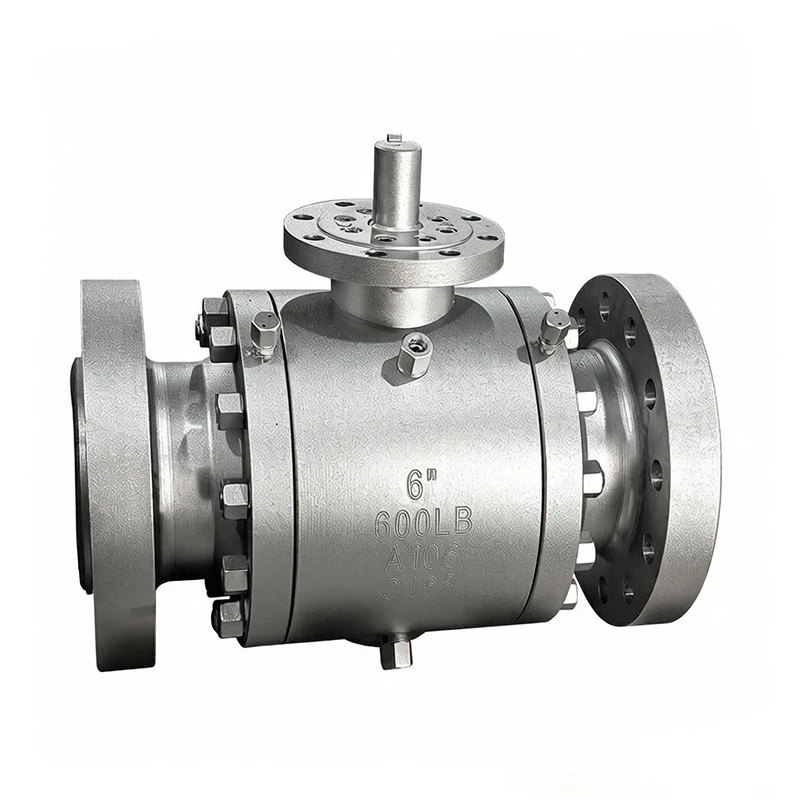
Product Introduction
High Pressure Forged Steel Butt Weld Trunnion Ball Valves provide quarter-turn isolation for industrial pipelines. The forged steel body contains line pressure, while the trunnion-supported ball rotates to open or close the flow passage. Butt weld ends connect to compatible piping through permanent welded joints. Size, pressure class, materials, sealing arrangement, and operation are selected according to pipeline specifications and service conditions.
Key Product Advantages
Forged Steel Body
The forged pressure-containing body provides a solid structural foundation for high-pressure service. Material grade and heat treatment are specified according to the design requirements.
Trunnion-Supported Ball
Upper and lower trunnions support the ball during operation. This arrangement helps control ball movement and operating torque under the specified pressure conditions.
Butt Weld Ends
Weld-end dimensions and preparation are matched to the specified pipe size, wall thickness, and applicable piping requirements.
Configurable Sealing
Soft-seat and metal-seat options can be evaluated according to operating temperature, process medium, and required shut-off performance.
Technical Specifications
|
Parameter |
Reference Specification |
|
Valve type |
Trunnion-mounted ball valve |
|
Body construction |
Forged steel |
|
Nominal size |
NPS 2–24 / DN 50–DN 600 |
|
Pressure class |
ASME Class 600, 900, 1500, 2500 |
|
End connection |
Butt weld |
|
End preparation |
ASME B16.25 |
|
Body material |
ASTM A105N or ASTM A350 LF2 |
|
Seat type |
Soft seat or metal seat |
|
Operation |
Gearbox, pneumatic, or electric, as specified |
|
Design standard |
API 6D or ASME B16.34, |
|
Testing |
Applicable standard and approved inspection plan |
|
Operating temperature |
Determined by material, seat, seals, and pressure rating |
Materials and Configuration
Body Materials
ASTM A105N and ASTM A350 LF2 may be considered for suitable carbon steel and low-temperature applications. Material selection follows the specified design temperature, pressure, and service conditions.
Ball and Stem
Internal component materials and surface treatments are selected according to corrosion exposure, wear requirements, and process-medium compatibility.
Seats and Seals
Seat and seal materials are matched to the medium, temperature, pressure, and specified leakage acceptance criteria.
Operating Mechanism
Gearbox, pneumatic, or electric operation can be specified according to valve size, operating torque, installation space, and automation requirements.
Applications
Oil and Gas Pipelines
Isolation duties in transmission, gathering, and processing systems, subject to the specified pressure rating and service conditions.
Petrochemical Plants
Process-line isolation for compatible liquids and gases, with materials and seals selected for the operating environment.
Power and Industrial Facilities
Shut-off applications in high-pressure process and utility piping where the selected valve meets the system design requirements.
Industrial Gas Systems
Gas-line isolation requiring a specified pressure rating, compatible sealing materials, and documented inspection criteria.
Customization Options
Size and Pressure Class
Nominal size, pressure class, face-to-end dimensions, and weld-end details can be reviewed against pipeline drawings and project specifications.
Material Selection
Body, ball, stem, seats, seals, and fasteners can be specified according to process conditions and material requirements.
Bore and Seat Design
Full-bore or reduced-bore configurations can be evaluated according to flow requirements and pipeline design. Seat selection follows the required shut-off performance and service conditions.
Actuation and Accessories
Operating arrangements and accessories can be specified according to torque requirements, installation layout, and control-system interfaces, subject to design availability.
Manufacturing and Quality Control
Material Verification
Material grades and traceability requirements are established before production. Material certificates are supplied according to the agreed documentation scope.
Precision Machining
Critical dimensions, sealing surfaces, stem interfaces, and weld-end geometry are checked against approved drawings and applicable tolerances.
Assembly Inspection
The ball, seats, stem, seals, and operating mechanism are assembled to the approved configuration. Opening and closing functions are checked during final inspection.
Quality Records
Dimensional inspection records, material documents, and test reports are defined by the order requirements and agreed inspection plan.
Standards and Testing
Design Requirements
API 6D or ASME B16.34 may apply according to the selected valve design and project specification. The governing standard must be confirmed before production.
Weld-End Preparation
ASME B16.25 may be specified for butt-welding end preparation. Pipe outside diameter, wall thickness, bevel geometry, and alignment requirements must match the approved drawings.
Pressure and Seat Tests
Shell and seat tests follow the applicable standard and agreed acceptance criteria. Test pressure, duration, medium, and leakage limits are defined in the inspection requirements.
Additional Qualification
Fire testing, fugitive-emission qualification, sour-service requirements, and third-party inspection can be specified where applicable and confirmed for the selected configuration.
Project Selection Guide
Design Conditions
Provide design pressure, operating pressure, temperature range, and process medium to establish the required rating and material compatibility.
Pipeline Dimensions
Confirm nominal size, pipe outside diameter, wall thickness, weld-end preparation, and applicable piping standard.
Operating Requirements
Specify bore configuration, shut-off requirements, operating method, and automation interfaces.
Inspection and Documentation
Identify applicable standards, material certificates, inspection points, pressure-test requirements, and project documentation.
Frequently Asked Questions
Q: What is a trunnion-mounted ball valve?
A: It uses upper and lower trunnions to support the ball during quarter-turn operation, making it suitable for specified high-pressure isolation duties.
Q: Can the valve be customized?
A: Size, pressure class, materials, seat design, bore, weld ends, and operating arrangements can be reviewed against project requirements.
Q: Which standard applies to butt weld ends?
A: ASME B16.25 may be specified for end preparation. Final dimensions must match the approved valve and piping drawings.
Q: How is the operating temperature determined?
A: The allowable range depends on body material, seat and seal materials, pressure rating, and design qualification.
Q: Which inspection documents are available?
A: Material certificates, dimensional inspection records, and pressure-test reports can be specified according to the agreed order documentation.
Hot Tags: high pressure forged steel butt weld trunnion ball valve, China high pressure forged steel butt weld trunnion ball valve manufacturers, suppliers, factory, anti static ball valve, ball valve socket, butt weld ball valves, class 300 ball valves, full port ball valve, industrial ball valve