

A ball valve is a crucial component in many industrial and commercial systems, known for its reliability, durability, and efficient flow control. One of the key aspects of a ball valve's operation is the rotational angle of the ball inside the valve body. In this blog post, we'll explore what the rotational angle of the ball in a ball valve during operation means, why it matters, and how it varies among different types of ball valves.
Understanding the Basics of Ball Valves
Before diving into the rotational angle, let's briefly review how a ball valve works. A ball valve consists of a spherical disc (the ball) with a hole (bore) through its center. The ball is positioned within the valve body, and when the valve is open, the bore aligns with the flow path, allowing fluid or gas to pass through. When the valve is closed, the ball is rotated so that the bore is perpendicular to the flow path, blocking the flow.
The Standard Rotational Angle
In most common ball valves, the standard rotational angle for a full open - to - full closed operation is 90 degrees. This 90 - degree rotation is a simple and efficient way to control the flow. With just a quarter - turn of the valve handle or actuator, the valve can be fully opened or closed. This quick operation makes ball valves ideal for applications where rapid flow shut - off or start - up is required.
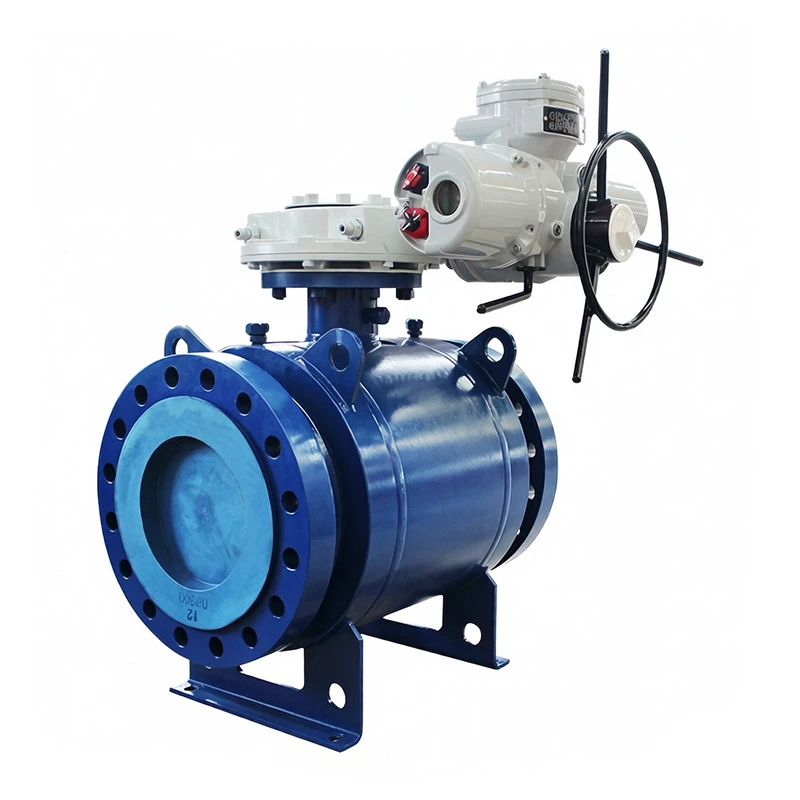
For example, in a water supply system for a large industrial plant, a Motor Operated Ball Valve can be used. If there is a need to quickly stop the water flow in case of an emergency, the motor can rotate the ball by 90 degrees in a matter of seconds, effectively shutting off the supply.
Factors Affecting the Rotational Angle
While 90 degrees is the standard, there are situations where the rotational angle may deviate.
Valve Design
Some special - purpose ball valves may have a different design that requires a different rotational angle. For instance, a segmented ball valve, which is often used for precise flow control, may require more than 90 degrees of rotation to achieve full flow regulation. The segmented ball has a non - circular shape, and to adjust the flow rate accurately, it may need to rotate through an angle of 180 degrees or more.
Application Requirements
The specific requirements of the application can also influence the rotational angle. In some cases, partial opening or closing is necessary to control the flow rate precisely. For example, in a chemical process where the flow of a reactive chemical needs to be carefully regulated, the ball valve may be set to rotate only a few degrees to allow a small amount of the chemical to pass through.
Rotational Angle in Different Types of Ball Valves
Pneumatic Forged Steel Flanged Ball Valve
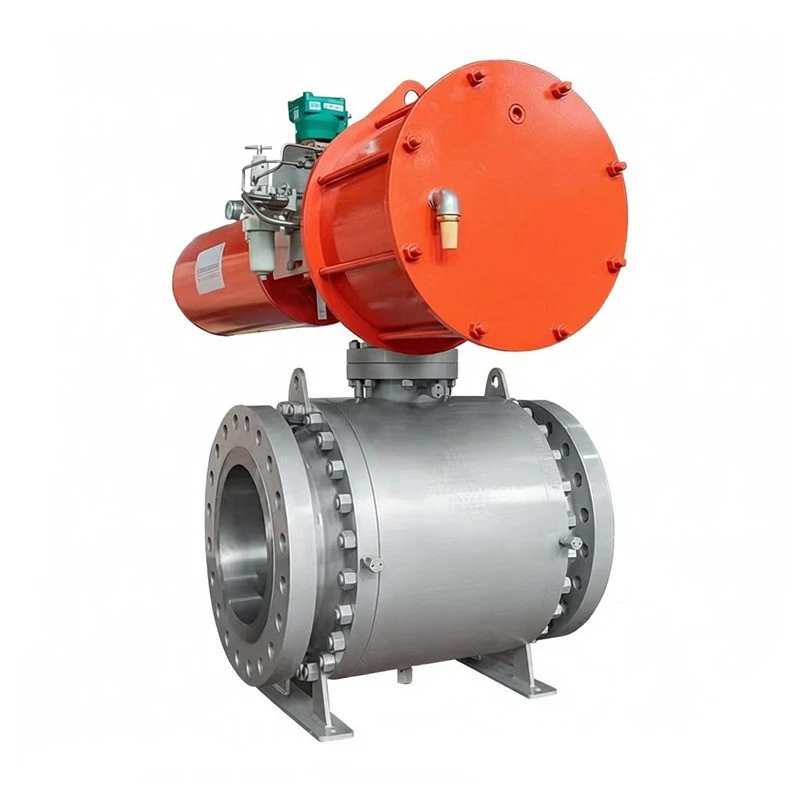
Pneumatic ball valves are actuated by compressed air. In most pneumatic forged steel flanged ball valves, the standard 90 - degree rotation is maintained. The pneumatic actuator is designed to rotate the ball quickly and accurately through this angle. The advantage of this type of valve is its fast response time, which is crucial in applications such as automated manufacturing processes where rapid flow control is needed.
High Pressure Metal Seated Trunnion Ball
High - pressure metal - seated trunnion ball valves are designed to handle high - pressure and high - temperature applications. These valves typically also operate with a 90 - degree rotational angle. The trunnion design provides additional support to the ball, ensuring that it can rotate smoothly even under high - pressure conditions. This type of valve is commonly used in oil and gas pipelines, where reliable flow control under high pressure is essential.
Electrically Operated Ball Valve
Electrically operated ball valves are powered by an electric motor. Just like their pneumatic counterparts, they usually have a 90 - degree rotational angle. The electric motor can be controlled precisely, allowing for accurate positioning of the ball. This makes electrically operated ball valves suitable for applications where remote control and precise flow regulation are required, such as in building automation systems.
Worm Gear Forged Steel 3 - Piece Flanged Ball Valve
Worm gear - operated ball valves are often used when manual control is preferred. The worm gear mechanism provides a mechanical advantage, making it easier to rotate the ball. These valves typically operate with a 90 - degree rotation. The 3 - piece design allows for easy maintenance and inspection of the valve components. Worm gear forged steel 3 - piece flanged ball valves are commonly used in smaller industrial and commercial applications.
Importance of the Correct Rotational Angle
Ensuring the correct rotational angle of the ball in a ball valve is critical for several reasons.
Flow Control
The rotational angle directly affects the amount of fluid or gas that can pass through the valve. If the ball does not rotate through the correct angle, the flow may be restricted or not fully shut off. In applications where precise flow control is required, such as in a pharmaceutical manufacturing process, an incorrect rotational angle can lead to inaccurate dosing and product quality issues.
Valve Lifespan
Incorrect rotational angles can also cause premature wear and tear on the valve components. If the ball is not fully seated or opened, it can rub against the valve seat, causing damage to both the ball and the seat. This can lead to leakage, reduced efficiency, and ultimately, a shorter valve lifespan.
Conclusion
The rotational angle of the ball in a ball valve during operation is a fundamental aspect that impacts the valve's performance, flow control capabilities, and lifespan. While the standard rotational angle for most ball valves is 90 degrees, special - purpose valves and specific application requirements may necessitate different angles.
As a leading ball valve supplier, we understand the importance of providing high - quality valves with accurate rotational angles. Whether you need a Motor Operated Ball Valve, Pneumatic Forged Steel Flanged Ball Valve, High Pressure Metal Seated Trunnion Ball, Electrically Operated Ball Valve, or Worm Gear Forged Steel 3 - Piece Flanged Ball Valve, we have a wide range of products to meet your needs.
If you are in the market for ball valves and want to discuss your specific requirements, please feel free to contact us. Our team of experts is ready to assist you in selecting the right valve for your application.
References
- Thames, L. P. (2007). Handbook of Valves. Elsevier.
- Wachel, R. (2006). Industrial Valves: Design and Selection. CRC Press.