

As a respected supplier of ANSI Standard Flanged Ball Valves, I've witnessed firsthand the diverse applications and challenges these valves face in various environments. One particularly demanding scenario is the low - temperature environment. In this blog, I'll delve into how ANSI Standard Flanged Ball Valves perform under such conditions, exploring their design, materials, and potential issues.
Design Features and Their Impact in Low - Temperature Environments
ANSI Standard Flanged Ball Valves are designed with precision to meet specific industry requirements. The flanged connection provides a secure and leak - tight seal, which is crucial in any application, especially in low - temperature settings. The ball within the valve rotates to control the flow of fluid, and its design allows for quick and efficient operation.
In low - temperature environments, the valve's design needs to account for the contraction of materials. The flanges, for example, must be able to maintain their integrity as the temperature drops. The ANSI standard specifies certain dimensions and tolerances for flanges, which helps ensure that the valve can withstand the stresses caused by thermal contraction. The tight fit between the ball and the seat is also essential. As the temperature decreases, any gaps or misalignments can lead to leakage, which is unacceptable in many low - temperature applications such as cryogenic systems.
Materials Selection for Low - Temperature Performance
The choice of materials is a critical factor in determining how well an ANSI Standard Flanged Ball Valve performs in low - temperature environments. For the valve body, materials like stainless steel are commonly used. Stainless steel has excellent corrosion resistance and retains its mechanical properties at low temperatures. It can withstand the brittleness that some materials experience in cold conditions, ensuring the valve remains structurally sound.
The ball and seat materials also play a vital role. In low - temperature applications, materials such as PTFE (polytetrafluoroethylene) are often used for the seat. PTFE has good low - temperature flexibility and can maintain a tight seal against the ball. However, it's important to note that PTFE has limitations in terms of temperature and pressure, so in more extreme low - temperature and high - pressure scenarios, metal seats may be a better choice. Metal seats, such as those made of stainless steel or alloy steels, can withstand higher pressures and lower temperatures without losing their sealing properties.
Performance Challenges in Low - Temperature Environments
Despite their robust design and appropriate material selection, ANSI Standard Flanged Ball Valves can face several challenges in low - temperature environments. One of the main issues is the potential for ice formation. When the valve is exposed to low temperatures and moisture, ice can build up on the valve components, especially on the outside of the valve body and around the stem. This ice can impede the valve's operation, making it difficult to open or close the valve.
Another challenge is the change in the mechanical properties of the materials. As mentioned earlier, some materials can become brittle at low temperatures. This brittleness can lead to cracking or failure of the valve components, especially if the valve is subjected to sudden pressure changes or mechanical shocks. Additionally, the lubricants used in the valve can thicken or solidify at low temperatures, reducing the smoothness of the valve's operation.
Mitigation Strategies
To overcome these challenges, several mitigation strategies can be employed. For ice formation, insulation can be applied to the valve. Insulation helps to maintain the temperature of the valve components above the freezing point, preventing ice from forming. There are various types of insulation materials available, such as fiberglass or foam, which can be wrapped around the valve body and stem.
To address the issue of material brittleness, careful material selection is crucial. As mentioned, stainless steel and other alloys that are known for their low - temperature toughness should be used. Additionally, heat treatment processes can be applied to improve the mechanical properties of the materials. For the lubrication issue, special low - temperature lubricants can be used. These lubricants are formulated to remain fluid at low temperatures, ensuring smooth valve operation.
Comparison with Other Valve Types
When considering valves for low - temperature environments, it's useful to compare ANSI Standard Flanged Ball Valves with other valve types. For example, GB Standard Flanged Ball Valve is another type of flanged ball valve. While both ANSI and GB standards have their own specifications, the ANSI Standard Flanged Ball Valve is more commonly used in North American and international markets. The GB standard may have different dimensions and requirements, which can affect its performance in low - temperature applications.
Forged Steel Insulated Flanged Ball Valve is designed with insulation to protect the valve from low - temperature effects. This type of valve is similar to the ANSI Standard Flanged Ball Valve in terms of its flanged connection and ball - type design. However, the forged steel construction may offer additional strength and durability, making it suitable for more demanding low - temperature applications.
Metal Flanged Ball Valve is another option. The all - metal construction of this valve makes it highly resistant to low - temperature brittleness and can withstand high pressures. It may be a better choice for extremely low - temperature and high - pressure environments compared to valves with non - metal seats.
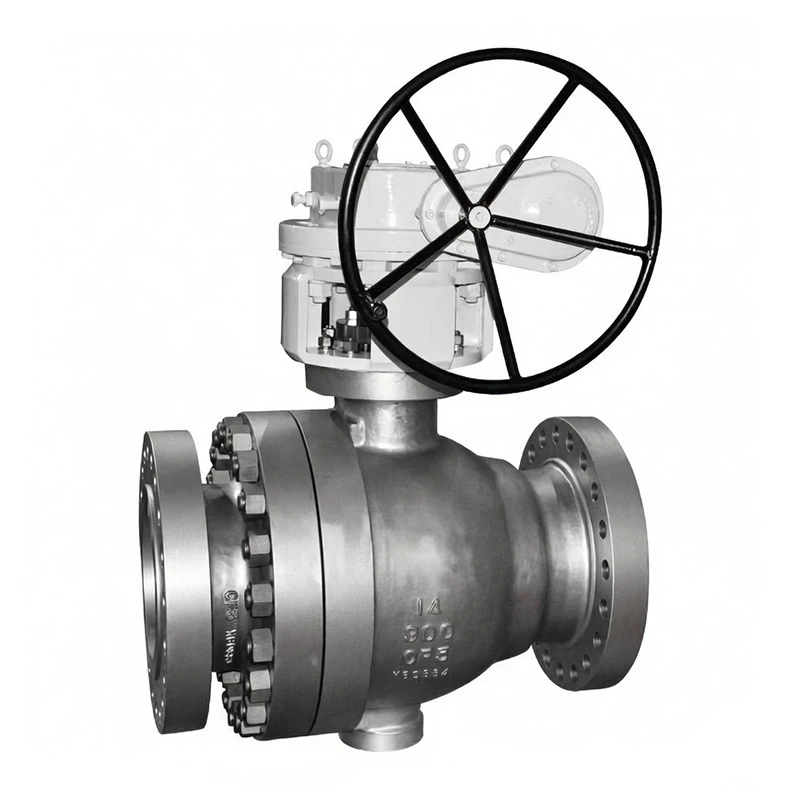

High Pressure Metal Seated Trunnion Ball is designed for high - pressure applications. In low - temperature environments, the metal seat provides a reliable seal even under extreme conditions. The trunnion design helps to reduce the operating torque, making it easier to operate the valve in cold conditions.
Wafer Style Ball Valve is a more compact and lightweight option. While it may not be as suitable for high - pressure or extremely low - temperature applications as the flanged ball valves, it can be used in less demanding low - temperature systems where space is a concern.
Conclusion and Call to Action
In conclusion, ANSI Standard Flanged Ball Valves can perform well in low - temperature environments when properly designed and maintained. Their robust design, appropriate material selection, and the implementation of mitigation strategies can help overcome the challenges posed by low temperatures. However, it's important to carefully consider the specific requirements of each application and compare different valve types to ensure the best performance.
If you're in the market for ANSI Standard Flanged Ball Valves for low - temperature applications, I encourage you to reach out for a detailed discussion. Our team of experts can provide you with the right solutions tailored to your needs. Whether you're dealing with cryogenic systems, refrigeration units, or other low - temperature applications, we have the knowledge and experience to help you make the best choice.
References
- "Valve Handbook" by J. Paul Tullis
- "Materials for Low - Temperature Applications" by ASM International
- ANSI/ASME B16.34 - Standard for Valves - Flanged, Threaded, and Welded End
- Industry reports on valve performance in low - temperature environments