
Product Introduction
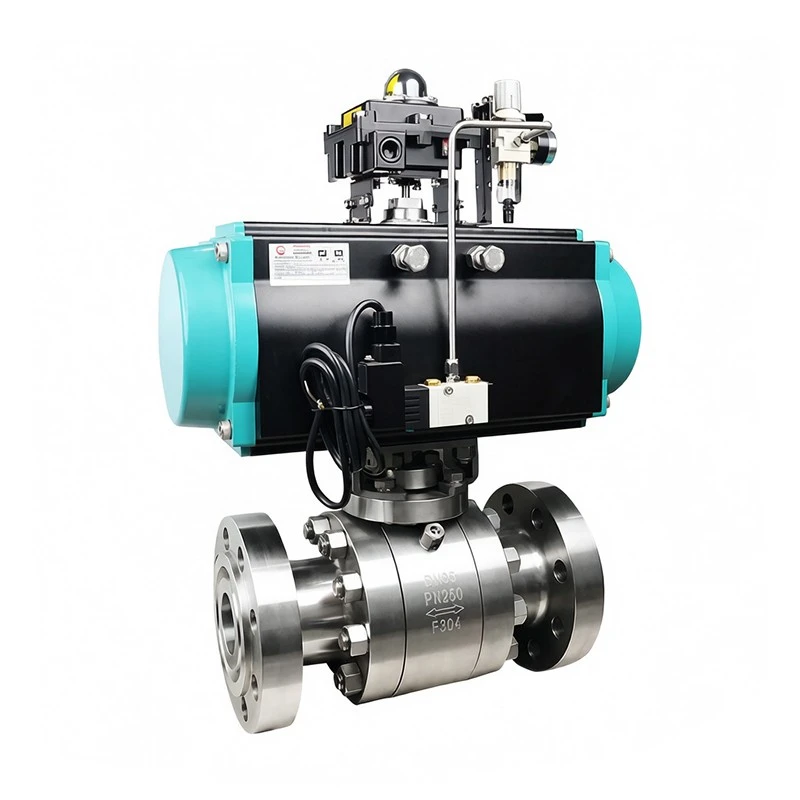
High Temperature Metal Seated Trunnion Ball Valves provide quarter-turn isolation for industrial pipelines operating at elevated temperatures and pressures. The trunnion-mounted ball is supported by upper and lower bearings, while precision-machined metal seats control shut-off. Hard-faced sealing surfaces can be selected for service involving heat, wear and demanding process conditions. Body materials, seat treatments, stem packing and pressure ratings are matched to the operating medium and required leakage criteria. Custom configurations are available for refining, petrochemical processing, thermal oil systems and other high-temperature applications.
Key Advantages
Metal-to-Metal Sealing
Metal seats support isolation in elevated-temperature service. Seat materials and surface finishes are selected according to fluid properties, operating conditions and the specified leakage acceptance criteria.
Trunnion-Supported Ball
The supported ball transfers pressure loads to dedicated trunnions, helping control seat loading and operating torque within the rated operating range.
Wear-Resistant Surfaces
Hard-facing options, including chrome carbide and tungsten carbide, can be specified according to erosion exposure, particle content and required surface durability.
Configurable Operation
Gear, pneumatic and electric operation can be selected according to valve size, differential pressure, operating frequency and control requirements.
Technical Specifications
|
Parameter |
Reference Specification |
|
Valve Type |
Metal Seated Trunnion Ball Valve |
|
Nominal Size |
NPS 2–24 |
|
Metric Size |
DN 50–600 |
|
Pressure Class |
ASME Class 150–1500 |
|
Reference Temperature |
Up to 500°C |
|
Body Material |
Carbon Steel, Alloy Steell |
|
Ball Material |
Stainless Steel or Alloy Steel |
|
Seat Type |
Metal-to-Metal |
|
Surface Treatment |
Hard-Facing or Selected Coating |
|
Bore |
Full Bore or Reduced Bore |
|
End Connection |
RF, RTJ or Butt Weld |
|
Operation |
Gear, Pneumatic or Electric |
|
Design Standard |
API 6D or ASME B16.34 |
|
Testing Standard |
Applicable Shell and Seat Test Standard |
Materials and Sealing Options
Body Materials
Carbon steel, alloy steel and stainless steel grades are selected according to design pressure, temperature, corrosion exposure and applicable material specifications.
Ball and Seats
Ball and seat substrates are matched to the process medium and required sealing performance. Suitable hard-facing treatments can be specified for wear and erosion resistance.
Stem and Packing
Stem materials are selected for mechanical strength and temperature compatibility. Graphite-based packing may be used where supported by the design and service conditions.
Material Compatibility
Selection considers fluid chemistry, oxidation, corrosion, thermal expansion and operating cycles. Final material grades and surface treatments are confirmed against the process data.
Industrial Applications
Refining and Petrochemical
Isolation of hot hydrocarbon streams and process lines within the valve's rated pressure and temperature limits.
Thermal Oil Systems
Shut-off service in heat transfer circuits requiring metal seating compatible with the operating temperature and fluid properties.
Power Generation
Isolation of selected high-temperature process and auxiliary pipelines according to system operating conditions.
Chemical Processing
Pipeline isolation for compatible process fluids requiring specified temperature resistance, sealing performance and material compatibility.
Design and Operating Configuration
Trunnion Support
Upper and lower supports locate the ball and manage pressure-related loads. Bearing design and operating torque are selected for the specified duty.
Seat Arrangement
Seat configuration is determined by flow direction, differential pressure, cavity pressure relief requirements and the required isolation function.
Thermal Expansion
Ball, seat, body and stem clearances account for thermal expansion at operating temperature. The sealing arrangement must match the specified temperature range and operating cycle.
Actuation
Actuator sizing considers breakaway torque, running torque, differential pressure, operating frequency and available power. Final selection uses calculated valve torque and the required design margin.
Manufacturing and Quality Inspection
Precision Machining
Ball geometry, sealing surface finish, seat contact and critical dimensions are checked against approved drawings and inspection criteria.
Surface Treatment
Hard-facing or coating condition is verified against the specified material and inspection requirements.
Pressure and Seat Testing
Shell and seat tests follow the applicable standard and approved test procedure. Test pressures and leakage acceptance criteria are defined by the selected standard and project specification.
Inspection Records
Material certificates, dimensional inspection reports and pressure test records can be provided according to the agreed documentation scope.
Customization Options
Size and Pressure Class
Valve dimensions and pressure ratings are reviewed against piping specifications and the required operating conditions.
Materials and Coatings
Body alloys, ball and seat materials, surface treatments and packing arrangements are specified according to the process medium and temperature.
End Connections
RF flanged, RTJ flanged and butt-weld ends can be configured according to piping dimensions and applicable connection standards.
Operation and Accessories
Gear operators, pneumatic or electric actuation, mounting arrangements and position indication can be specified according to operating requirements.
Technical Selection Guide
Process Conditions
Provide normal and maximum operating temperatures, design pressure, differential pressure, fluid composition and corrosive or abrasive components.
Shut-Off Requirements
Specify flow direction, required leakage rate, operating frequency and cavity pressure relief requirements.
Pipeline Interface
Confirm nominal size, pressure class, flange facing or welding-end dimensions, face-to-face length and applicable design standards.
Project Requirements
Identify material specifications, fire-safe requirements, fugitive-emission limits, inspection plans and documentation requirements where applicable.
Ordering and Inquiry Information
For technical review and quotation, provide valve size, pressure class, operating temperature, design pressure, process medium, end connection, material requirements and operating method.
A valve data sheet, piping and instrumentation diagram, bill of materials or inspection and test plan can also be supplied when available. These details support configuration review, actuator sizing, technical confirmation and quotation preparation.
Frequently Asked Questions
Q: What is the maximum operating temperature?
A: The allowable temperature depends on the body material, pressure rating, seat and coating combination, packing and gasket materials. Confirm the rated limits for the selected configuration.
Q: What leakage rate can a metal seated ball valve achieve?
A: Leakage performance depends on seat design, sealing surface finish, operating conditions and the specified test standard. Acceptance criteria should be confirmed before production.
Q: Is the valve suitable for abrasive media?
A: Suitable hard-facing options can be evaluated according to particle characteristics, fluid velocity, material compatibility and operating cycles.
Q: Can the valve be supplied with an actuator?
A: Yes. Gear, pneumatic and electric operation can be specified according to calculated torque, differential pressure and control requirements.
Q: Can the valve be customized?
A: Yes. Size, pressure class, materials, surface treatments, end connections, actuation and inspection documentation can be specified against confirmed project requirements.
Hot Tags: high temperature metal seated trunnion ball valve, China high temperature metal seated trunnion ball valve manufacturers, suppliers, factory, api 608 ball valve, api 608 floating ball valve, high temperature ball valve, pipeline ball valves, reduced port ball valves, valve of the ball