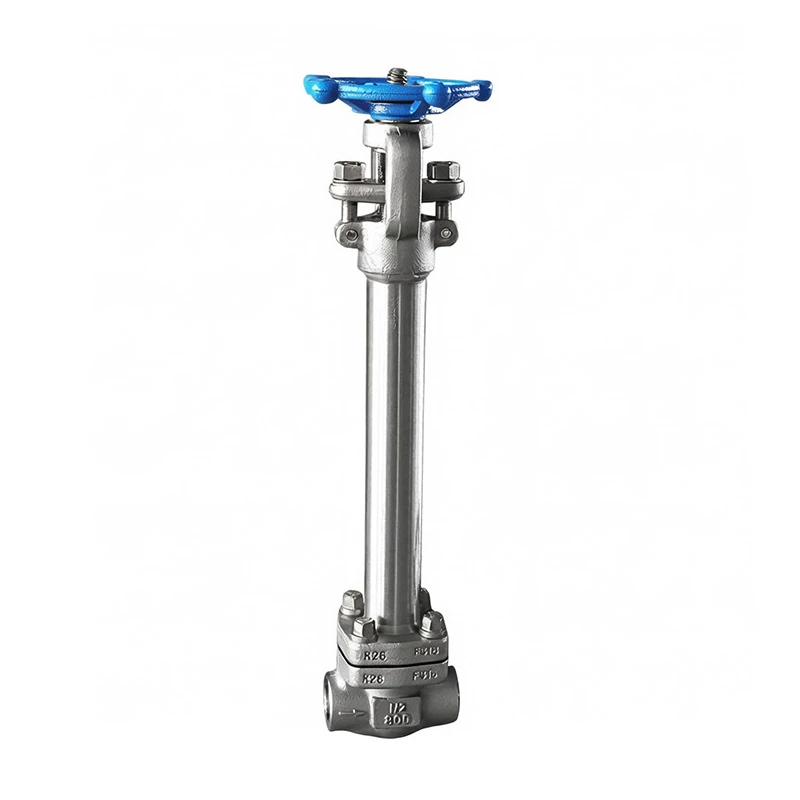
As a common type of industrial valve, the GB standard flanged ball valve operates on a simple yet efficient principle. It consists primarily of four components: the valve body, the ball, the sealing rings, and the actuating mechanism.
Let us begin with the ball itself. It features a central bore and is capable of free rotation-much like a ball rolling within its seat. Connected to the pipeline at both ends, the ball controls the flow of fluid by changing its angular position. When the ball is positioned at a 90-degree angle (fully open), the flow is unobstructed; when rotated to the 0-degree position (fully closed), the flow is completely blocked.
The rotation of the ball is driven by the valve stem and shaft-the function of the actuating mechanism. By turning a handwheel or operating an electric motor, the ball's position can be precisely controlled to open or close the valve. This design ensures ease of operation and excellent sealing performance, effectively preventing leakage.
The flange section is crucial for connecting the valve body to the pipeline. GB standard flanges utilize standardized dimensions to ensure compatibility with various piping systems; they are secured with bolts to guarantee a stable and leak-proof connection.
In summary, the GB standard flanged ball valve functions much like a rotating "gate," controlling the flow of liquids or gases by adjusting the ball's opening angle. With its compact structure and flexible operation, it is widely used across sectors such as petrochemicals, power generation, and water treatment.